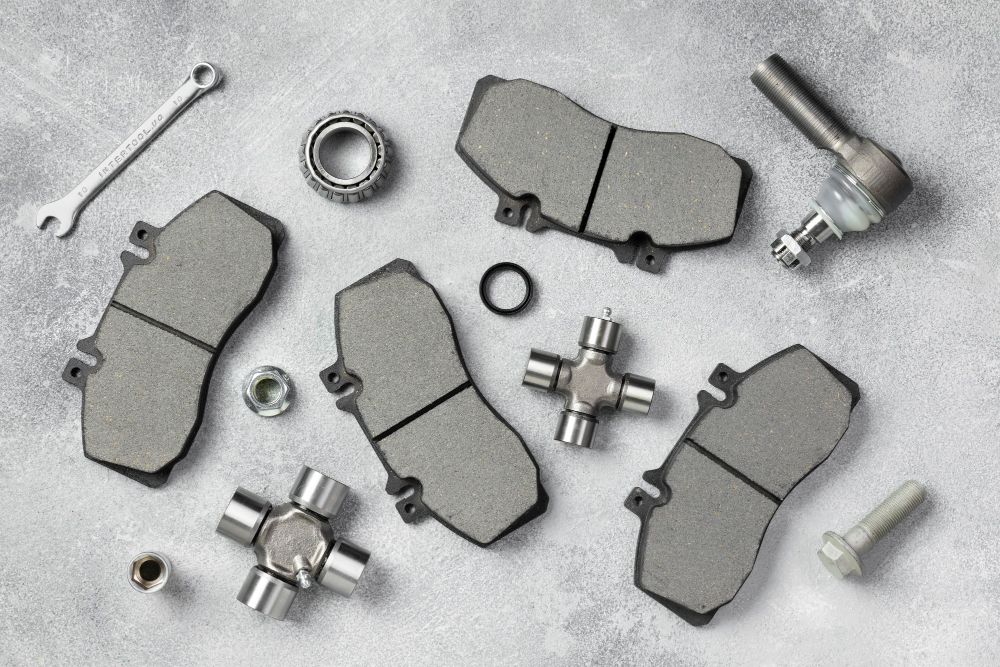
Brake Pad Lifespan in Algeria: Expert Guide for Drivers
Brake Pad Lifespan in Algeria: Expert Guide for Drivers
Knowing when to change your brakes is a vital safety question for every driver. I often receive questions about the longevity of wear parts. The lifespan of brake pads is a particular concern for drivers in Algeria. Climate conditions and terrain require extra vigilance. In this expert guide, I will explain in detail how to manage this essential component.
What is the average lifespan of brake pads?
The longevity of your brakes is not an exact science. It depends on your driving style and environment. On average, a set of front pads lasts between 30,000 and 40,000 kilometers. Rear brakes are less stressed in daily use. They can reach 70,000 to 80,000 kilometers without major issues.
The difference in wear between front and rear brakes
Understanding braking physics explains this difference. During braking, the vehicle's weight shifts forward. The front axle supports about 70% to 80% of the total braking effort. This is why front pads wear much faster—they endure higher heat and mechanical pressure.
The impact of driving type on mileage
Urban drivers constantly use their brakes. Traffic lights and jams in Algiers or Oran reduce pad life. Under these conditions, replacement can occur as early as 15,000 kilometers. In contrast, highway driving over long distances preserves materials. On the East-West motorway, a single set of pads can sometimes exceed 70,000 kilometers.
Why brakes wear faster in Algeria
Our country presents unique technical challenges for braking systems. Heat and terrain are the main enemies. Components face extreme thermal stress in summer. Long descents in mountainous regions further aggravate wear.
Mountain driving in Tlemcen and Constantine
Consider the famous Lalla Setti descent in Tlemcen. Slopes are steep and curves are numerous. If you rely only on the brake pedal, you risk overheating. This phenomenon is called brake fading. Heat rises to the point where the friction coefficient drops drastically. In these areas, wear is three times faster than on flat terrain.
Extreme summer heat and local dust
In summer, temperatures often exceed 40°C. Ambient air is too hot to cool the discs effectively. Resins binding the friction materials degrade faster. Dust and sand also get between components, acting like sandpaper and accelerating pad and disc wear.
How to recognize worn brake pads
Always pay attention to your vehicle’s signals. Never wait for total failure. A faulty braking system significantly increases stopping distances. Your safety and that of your passengers depends on prompt action.
Unusual noises and squealing when braking
A high-pitched squeal is often the first warning sign. Many vehicles have a mechanical wear indicator—a small metal tab that rubs against the disc. This squealing indicates very little pad material remains. A deep grinding noise is more serious, signaling metal-on-disc contact.
Pad thickness and wear indicator
A new pad is about 15 millimeters thick. I recommend replacement when it reaches 3 millimeters. In modern cars like Renault Clio 4 or Peugeot 208, a warning light illuminates—a dotted orange circle. Once it appears, about 3,000 kilometers remain. Never ignore this electronic alert.
Which brake pads should you choose?
The Algerian market offers several friction material technologies. Choice depends on your budget and performance needs. Here are the main categories.
Organic or semi-metallic pads
Organic pads are quiet and inexpensive. They provide good bite even when cold but wear quickly under high heat. Semi-metallic pads are industry standard, containing 30% to 65% metals such as steel or copper. They handle heat better but are noisier. This is my recommended choice for mixed driving in Algeria.
Ceramic brake pads
Ceramic pads are premium. Composed of ceramic fibers and non-ferrous bonding agents, their main strength is extreme temperature management. They produce very little dust and last much longer. Although more expensive, they are cost-effective long-term and protect your brake discs.
How to extend the life of your braking system
Simple techniques can reduce wear. Smart driving habits lower maintenance costs. In my experience, a conscientious driver can double the lifespan of brake pads.
Using engine braking effectively
Engine braking is your best ally, especially in mountains. Downshifting uses engine compression to slow the car, giving brake pads a much-needed break. Never keep your foot pressed on the brake during long descents. Prefer short, firm pressures to allow discs to cool. This habit prevents disc warping.
The crucial importance of bedding-in new pads
Many drivers neglect this critical stage. The first 200 kilometers after replacement are decisive. Contact surfaces must adjust properly. Avoid emergency braking or heavy stress during this period. Poor bedding can vitrify pad surfaces, reducing efficiency.
How much does brake replacement cost in Algeria?
Maintenance cost is an important factor for households. Prices vary by vehicle brand and quality of parts. The local market has become more structured in recent years with clear packages.
Prices for Renault, Peugeot, and Chinese brands
For a Renault Symbol or Dacia Sandero, front pad replacement often starts around 4,900 DZD including labor. Chinese brands like Chery or Geely are usually cheaper, with pads available from 3,000 DZD.
Electric vehicles and regenerative braking
EVs use the motor to brake and recover energy, so mechanical brake pads are less used. They can last 100,000 to 150,000 km. However, lack of use may promote rust. I recommend checking calipers annually to prevent seizing.
Why monitor brake fluid?
Brake fluid is the lifeblood of your system, transmitting pedal pressure to wheels. Over time, it absorbs moisture from the air.
Risk of boiling and soft pedal
Moisture lowers the fluid’s boiling point. During heavy braking, water can turn into vapor. Vapor is compressible, causing a soft or spongy pedal. This is extremely dangerous on descents. I recommend full fluid replacement every two years.
Regular maintenance to avoid extra costs
Checking fluid level is simple. Low levels often indicate pad wear. As pads thin, pistons extend more and consume more volume. Visual checks every 15,000 km help anticipate costs and prevent disc damage.
FAQ on brake pad lifespan
Can I change only the pads without the discs?
Yes, this is common. Discs are usually replaced every two or three sets of pads, if still thick and undamaged.
Why do my brakes squeal even though pads are new?
This often occurs during bedding. Dust or lack of lubrication on caliper contact points may also cause it. If persistent after 500 km, consult a professional.
Does eco-driving really save brake wear?
Absolutely. Anticipating stops and lifting your foot early reduces friction brake use. Good for your wallet and the environment.
What are the dangers of driving with worn brakes?
Longer stopping distances, potential metal breakage, blocked wheels, or immediate disc damage.
Are aftermarket brake parts reliable?
Yes, if compliant with ECE R90 standards. Brands like Bosch, Brembo, or Valeo are safe references. Avoid unbranded or very cheap parts flooding parallel markets.
Conclusion
The lifespan of your brake pads depends largely on your driving. In Algeria, be extra cautious during hot weather and mountain drives. Use engine braking, respect bedding periods, and maintain regularly. Regular maintenance is always cheaper than emergency repairs after an accident.
Do not wait for the warning light. Have a visual inspection done today by your mechanic. Share this article with loved ones to raise awareness about brake maintenance. Good information can save lives on our roads.